


Powered by


Completion
CERTIFICATE
Automotive Sensor Fusion and Filtering
This course is part of Sensor Fusion and Multi-Object Tracking.
Course Cost
₹ 25,533
Advanced
Skill Level
9 Weeks
Self-paced lessons
This advanced engineering course provides comprehensive coverage of sensor fusion fundamentals for automotive systems. Students learn Bayesian statistics and recursive estimation techniques for fusing information from multiple sensors like radar, lidar, and cameras. The curriculum combines theoretical foundations with practical implementation through MATLAB, covering Kalman filters, state space models, and particle filters. Through hands-on assignments, participants build their own sensor fusion toolbox and gain expertise in solving real-world autonomous vehicle perception challenges.

4
15,935 Enrolled
English
What you'll learn
Master Bayesian statistics and recursive estimation fundamentals
Implement Kalman filters for linear state space models
Develop expertise in modeling various automotive sensors
Create advanced non-linear filtering solutions in MATLAB
Design particle filters for complex estimation problems
Apply sensor fusion techniques to autonomous vehicle systems
Skills you'll gain
This course includes:
PreRecorded video
Graded assignments, exams
Access on Mobile, Tablet, Desktop
Limited Access access
Shareable certificate
Closed caption
Get a Completion Certificate
Share your certificate with prospective employers and your professional network on LinkedIn.
CREATED BY
PROVIDED BY

Get a Completion Certificate
Share your certificate with prospective employers and your professional network on LinkedIn.
CREATED BY
PROVIDED BY
Top companies offer this course to their employees
Top companies provide this course to enhance their employees' skills, ensuring they excel in handling complex projects and drive organizational success.





There are 7 modules in this course
This comprehensive course explores sensor fusion and non-linear filtering techniques essential for automotive perception systems. The curriculum covers fundamental concepts in Bayesian statistics, recursive estimation, and state space modeling. Students learn to implement various filtering algorithms, including Kalman filters and particle filters, using MATLAB. The course emphasizes practical applications in autonomous vehicle systems, teaching students how to fuse data from multiple sensors like radar, lidar, and cameras for accurate object positioning.
Introduction and Primer in statistics
Module 1
Bayesian Statistics
Module 2
State Space Models and Optimal Filters
Module 3
Kalman Filter and Properties
Module 4
Motion and Measurement Models
Module 5
Non-linear Filtering
Module 6
Particle Filter
Module 7
Fee Structure
Individual course purchase is not available - to enroll in this course with a certificate, you need to purchase the complete Professional Certificate Course. For enrollment and detailed fee structure, visit the following: Sensor Fusion and Multi-Object Tracking
Reviews
Testimonials and success stories are a testament to the quality of this program and its impact on your career and learning journey. Be the first to help others make an informed decision by sharing your review of the course.
Faculties
These are the expert instructors who will be teaching you throughout the course. With a wealth of knowledge and real-world experience, they're here to guide, inspire, and support you every step of the way. Get to know the people who will help you reach your learning goals and make the most of your journey.
1
Course
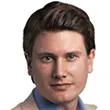
Dr. Lars Hammarstrand, a Post-Doctoral Research Fellow in the Signal Processing research group at Chalmers University of Technology, specializes in tracking, sensor data fusion, and non-linear estimation and filtering, with a particular focus on automotive active safety systems. His work contributes significantly to the Non-Hit Car & Truck project, supporting Volvo Car's ambitious goal of eliminating accidents in their vehicles by 2020. As an educator, Dr. Hammarstrand teaches graduate and undergraduate courses in non-linear filtering and linear systems, while also mentoring Ph.D. students. His course offerings include "Sensor Fusion and Non-linear Filtering for Automotive Systems" and contributions to the "Sensor Fusion and Multi-Object Tracking" professional certificate program. Through his research and teaching, Dr. Hammarstrand plays a crucial role in bridging advanced signal processing techniques with practical automotive safety applications, thereby shaping the future of road safety technology and preparing the next generation of engineers in this vital field.
Frequently asked Questions
Below are some of the most commonly asked questions about this course. We aim to provide clear and concise answers to help you better understand the course content, structure, and any other relevant information. If you have any additional questions or if your question is not listed here, please don't hesitate to reach out to our support team for further assistance.